 How-to
How Do You Recover From a Running-Related Hip Strain?
Last Updated: November 5, 2026
Quick Summary
Hip strain recovery begins with calming the acute phase using rest, ice, compression, and elevation for the first 48 to 72 hours, then rebuilding tissue with gentle stretching and controlled loading. Advance back to running gradually, adding short jog intervals with walk breaks and increasing weekly running time by no more than about 10 percent.
- Apply ice for about 15 to 20 minutes at a time, with at least a 45-minute gap between sessions.
- Start return to running with 1 minute of easy jogging to 2 minutes of walking.
- Keep one rest day between runs, since back-to-back days are the most common trigger for re-injury.
- Replace running shoes once the midsole is compressed, often between 300 and 500 miles.
- See a professional if pain lasts beyond a couple of weeks, worsens, or limits daily walking.
Table of Contents
- Why Running Causes Hip Strains and What Recovery Requires
- Step 1: Calm the Acute Phase With Rest, Ice, Compression, and Elevation
- Hip Flexor Strain Recovery: Stretches and Loading That Rebuild Tissue
- How Long Does a Hip Strain Take to Heal?
- Return to Running After Hip Injury: A Gradual Plan
- How to Avoid Hip Pain When Running
- When to See a Physical Therapist or Sports Medicine Professional
- Book a Recovery Assessment at Figa Chiropractic & Acupuncture
- Frequently Asked Questions
Why Running Causes Hip Strains and What Recovery Requires
Hip strain recovery starts with understanding what actually got injured. A hip strain is a stretch or tear of the muscles and tendons around the hip joint, most often the hip flexors or glutes. Runners get them because running loads those tissues thousands of times per session. (Source: research on soft tissue injury rehabilitation)
A runner adds mileage too fast, ignores tightness, and then feels a sharp pull near the front of the hip.
The fix is not just rest. Recovery requires calming inflammation first, then rebuilding strength and control.
- Overuse tops the list: sudden jumps in mileage or speed
- Weak glutes force the hip flexors to overwork
- Poor running form shifts load to the wrong tissues
- Hard surfaces and worn shoes add impact stress
Research on soft tissue injury rehabilitation confirms that early rest, ice, compression, and elevation remain the standard first step for mild to moderate muscle strains.
Step 1: Calm the Acute Phase With Rest, Ice, Compression, and Elevation
The acute phase is the first 48 to 72 hours after injury. The goal is simple: reduce pain and swelling so tissue can begin healing. How you handle these first few days can influence how quickly you return to running.
Follow the RICE protocol with specific dosing rather than vague gestures:
- Rest. Stop running and avoid painful movements. Relative rest beats total bed rest, keep walking short and pain-free to maintain circulation. A common pattern is to swap runs for pool walking or stationary cycling only if those remain pain-free.
- Ice. Apply a cold pack for about 15 to 20 minutes at a time, with at least a 45-minute gap between sessions, several times a day for the first 48 to 72 hours. Always place a thin cloth between the pack and skin.
- Compression. A wrap or sleeve limits swelling. Wrap snugly but not so tight that toes tingle or skin turns pale; remove it at night unless a clinician advises otherwise.
- Elevation. Raise the leg above heart level when possible, lying on a couch with the leg propped on pillows counts.
Compression therapy is one option many people use to support circulation and recovery. Our clinic offers NormaTec compression therapy for athletes who want guided recovery support.
Heat can change the calculus. In summer, dehydration and heat exposure can worsen tissue irritation and slow healing. Drink water before and after any outdoor activity, avoid mid-day sun when icing outdoors, and treat early-morning or indoor sessions as the default during June through September. Heat-specific recovery means keeping the injured area cool, hydrating deliberately, and not confusing heat-related stiffness with a setback.
Pushing through pain in this phase can lengthen the total recovery timeline, and aggressive massage or stretching in the first 48 hours may increase swelling rather than relieve it.
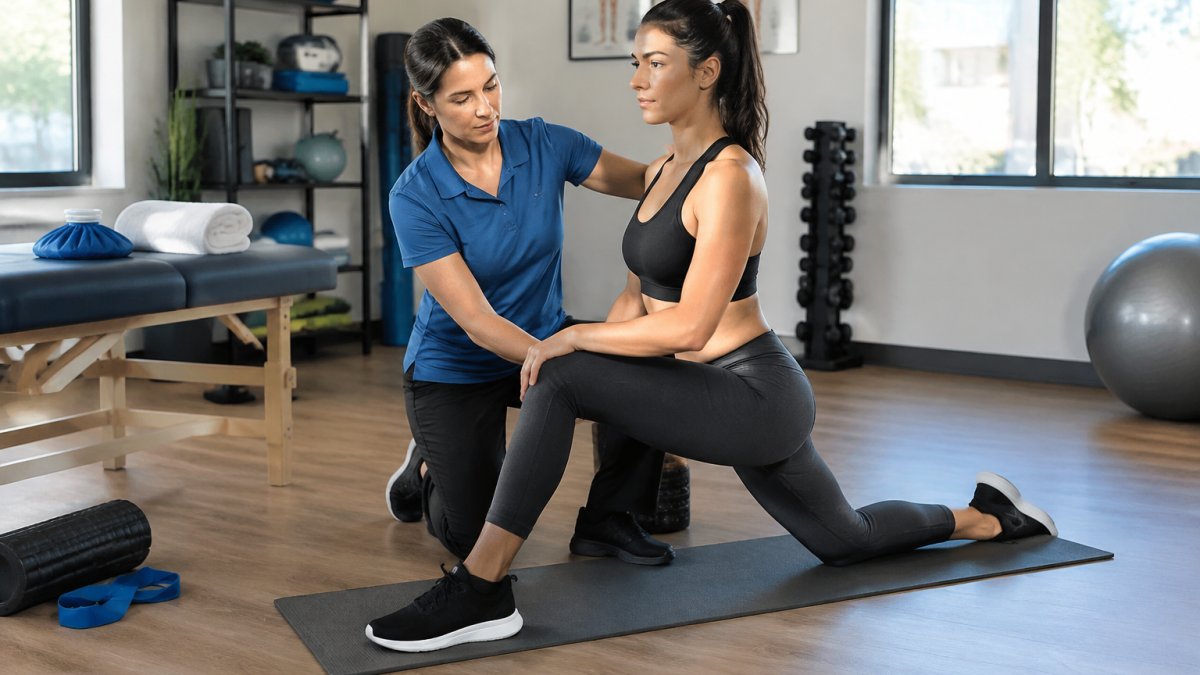
Hip Flexor Strain Recovery: Stretches and Loading That Rebuild Tissue
Hip flexor strain recovery moves from calming the tissue to rebuilding it. Gentle stretching comes first, then controlled loading.
Start with a kneeling hip flexor stretch. Hold it briefly and keep it pain-free. Add gentle range of motion work daily.
Then progress to eccentric loading. Slow, controlled movements build tissue tolerance better than passive stretching alone.
For stubborn muscle tightness, dry needle therapy can release knots that limit hip mobility.
Glute and Hip Abductor Strengthening
Weak gluteus medius and hip abductors are a common root cause. Strengthen them with side-lying leg lifts, clamshells, and banded walks.
- Keep reps slow and controlled
- Add resistance only when form stays clean
- Train both sides, even the uninjured one
Core Stability and Pelvic Alignment
Core stabilization keeps the pelvis level during each stride. A wobbly pelvis overloads the hip.
Try dead bugs, planks, and bird dogs. These build control without stressing the hip.
How Long Does a Hip Strain Take to Heal?
How long a hip strain takes to heal depends on severity. Mild strains often improve within a few weeks, while more significant tissue damage can take considerably longer.
Clinical guidance on hip pain and tissue healing notes that recovery timelines vary and that no single short estimate applies to every case.
| Strain Severity | Typical Signs | General Recovery Window |
|---|---|---|
| Mild | Tightness, minor pain | Days to a couple of weeks |
| Moderate | Pain with walking, limited motion | Several weeks |
| Severe | Sharp pain, weakness, swelling | Longer, with guided rehab |
Use pain as your guide. If daily walking hurts, the tissue is not ready for running.
Return to Running After Hip Injury: A Gradual Plan
Return to running after a hip injury should be gradual, not sudden. A structured plan protects the healing tissue and gives you clear criteria to advance or back off.
Use this progression, advancing only when each stage is pain-free during and for 24 hours after:
- Walk pain-free for 30 minutes first. No limping, no ache the next morning.
- Add short jog intervals with walk breaks. A common starting point is 1 minute of easy jogging to 2 minutes of walking, repeated for 20 to 30 minutes, every other day.
- Increase run time slowly each week. Most practitioners suggest raising total weekly running time by no more than about 10 percent per week, and only after a pain-free week at the current level.
- Keep one rest day between runs. Back-to-back running days are the most common trigger for re-injury in the first month.
- Stop if pain returns and back off. Drop to the previous pain-free stage for a week before trying again.
Surface and shoe choice matter during this window. In Chandler, concrete sidewalks and paved greenbelt paths are the hardest common surfaces, while packed dirt trails and the crushed-gravel paths around local parks are more forgiving. Rotating to softer surfaces during the return phase reduces impact stress on the hip. Replace running shoes once the midsole is compressed, most running shoes lose meaningful cushioning somewhere between 300 and 500 miles, and worn shoes raise impact load on an already irritated hip.
A sports chiropractor can guide this progression and help prevent re-injury. Our team explains how in this guide to unlocking athletic potential with a sports chiropractor.
Watch out: the most common mistake is jumping from pain-free walking straight to full runs, which frequently causes a flare within the first two weeks.
How to Avoid Hip Pain When Running
Avoiding hip pain when running comes down to load management and smart habits. Small changes prevent big setbacks.
- Increase weekly mileage gradually, not all at once
- Replace worn running shoes
- Run on varied, softer surfaces when possible
- Add post-run stretching and strength work
- Check running cadence and gait with a gait analysis
- Build core and glute strength year-round
Shoe and surface choice matter more than most runners think. Hard concrete and worn cushioning both raise impact stress on the hip.
The mental side counts too. Runners who rush back often re-injure. Patience is part of the plan.
When to See a Physical Therapist or Sports Medicine Professional
See a professional if pain lasts beyond a couple of weeks, worsens, or limits daily walking. Early guidance prevents chronic problems.
Red flags include sharp pain, swelling, weakness, or pain that wakes you at night.
Our clinic offers physical therapy as part of our services.
Book a Recovery Assessment at Figa Chiropractic & Acupuncture
Hip strain recovery works best with a plan built for your body. At Figa Chiropractic & Acupuncture, we offer personalized treatment plans and advanced tools like PEMF, NeuFit, and NormaTec to support your natural healing.
Visit our Chandler clinic page for hours and appointment details.
Frequently Asked Questions
How long does a hip strain from running take to heal?
Healing time depends on severity. Sources give different estimates: injured tissue can take 8 to 12 weeks depending on how bad the strain is, while some common running-related hip injuries improve in four to six weeks with consistent care. A single short timeline should not be treated as applying to every hip strain. Mild strains often settle faster than tendinopathy or chronic cases, and your recovery timeline depends on load management, strength work, and how early you address it.
Should I stop running if my hip hurts?
Stop running during the acute phase, especially if pain changes your stride or lingers after you finish. Pushing through sharp pain can turn an overuse injury into a longer setback. Swap running for low-impact cross-training such as swimming or cycling while symptoms settle. If pain is mild and only appears at the end of a run, a sports medicine professional can help you decide whether reduced mileage is appropriate. Use pain as your guide: anything that worsens day to day means back off.
What stretches or exercises help a hip flexor strain?
Start with gentle range of motion once acute pain calms, then progress to strengthening. Key exercises include gluteus medius and hip abductor work like side-lying leg lifts and clamshells, eccentric loading such as slow controlled step-downs, and core stabilization drills like dead bugs and planks. Post-run stretching for the hip flexors helps, but strength training is what rebuilds tissue tolerance. A physical therapist can tailor the progression and use soft tissue mobilization if needed.
How can I prevent hip pain when running?
Load management matters most: increase weekly mileage gradually, vary surfaces, and replace worn shoes. Add strength training for the glutes, hip abductors, and core twice a week, and check running cadence with a gait analysis if pain keeps returning. Post-run stretching and proper warm-ups support range of motion. In Chandler's heat, run early, hydrate well, and adjust intensity so fatigue does not break down your biomechanics. Addressing muscle imbalance early prevents the overuse injury cycle.
A running-related hip strain can sideline you for weeks if you ignore it. We help athletes across Chandler and the East Valley recover faster with non-invasive, drug-free care. Our personalized treatment plans, advanced therapies like PEMF and NeuFit, and expert sports recovery support are built to get you moving again. Get started with Figa Chiropractic & Acupuncture and take the first step back to pain-free running.