 How-to
How to Fix Tech Neck Pain at Home in 4 Steps
Quick Summary
Tech neck pain is strain in the neck and upper back from holding the head forward for long periods, usually while looking down at a phone, tablet or laptop. You can ease it at home by correcting your screen and posture habits, following a daily neck exercise routine, and taking regular movement breaks.
- Raise your laptop or monitor so the top sits at or just below eye level.
- Do a daily 10- to 15-minute routine of chin tucks, scapular retraction, isometric holds and upper-trap stretches.
- Take a movement break every 15 to 30 minutes during long screen sessions.
- A tech neck brace does not fix the cause and should only be used short-term while you change habits.
- Seek prompt medical assessment for arm numbness, tingling, weakness, or symptoms that worsen despite weeks of changes.
Table of Contents
- What Tech Neck Is and How to Spot Its Symptoms
- Step 1: Correct Your Screen and Posture Habits
- Step 2: Follow a Daily Tech Neck Exercise Routine
- Step 3: Decide Whether a Tech Neck Brace or Support Helps
- Frequently Asked Questions
What Tech Neck Is and How to Spot Its Symptoms
Tech neck pain is strain in the neck and upper back from holding the head forward for long periods, usually while looking down at a phone, tablet or laptop. Supporting muscles tighten and fatigue, and the first sign is often a dull ache at the base of the skull by the end of the workday. (Source: research summarized in a 2022 review published on PubMed Central)
Common symptoms include:
- Stiffness or soreness in the neck
- Tightness across the shoulders and upper back
- Headaches starting at the base of the skull
- Reduced range of motion when turning the head
- A rounded upper back or forward head position
Watch for these signs, especially if they return every day. Research summarized in a 2022 review published on PubMed Central, Text Neck Syndrome: Disentangling a New Epidemic describes forward-head posture as a key contributor to this kind of neck strain.
Step 1: Correct Your Screen and Posture Habits
Most tech neck starts with screen placement. Raise your laptop or monitor so the top sits at or just below eye level, and add an external keyboard so your neck does not tilt down.
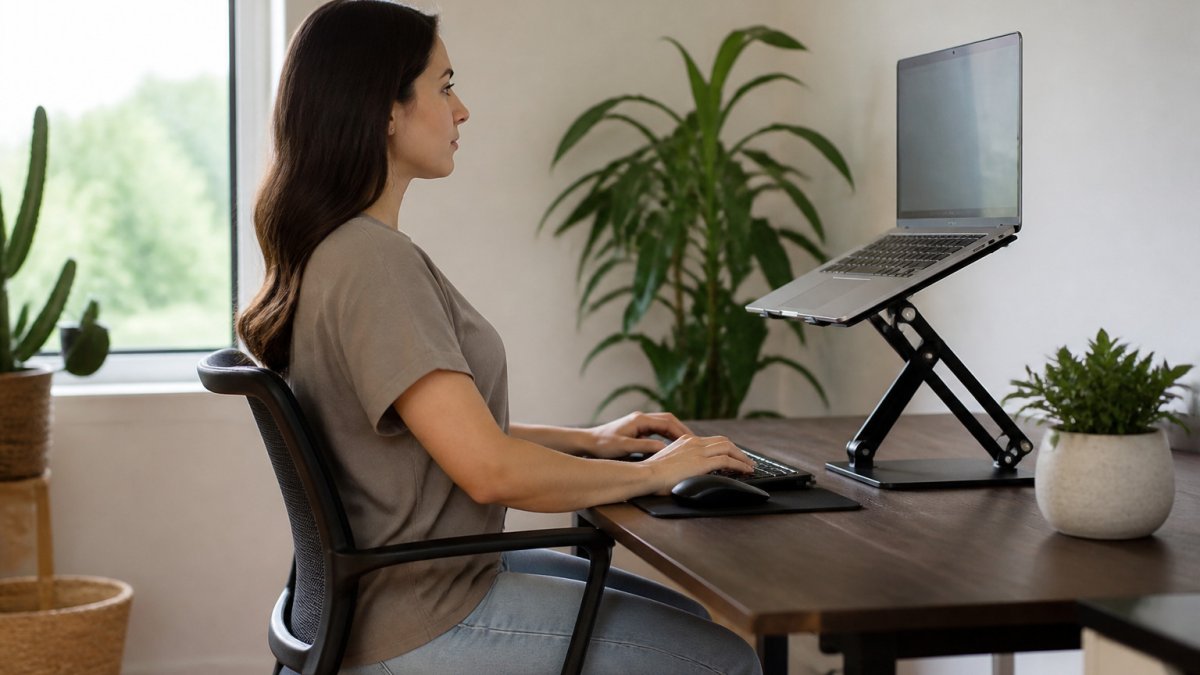
Next, check your seated position:
- Keep your feet flat on the floor
- Rest your back against the chair
- Support your forearms on the desk or pillows
- Keep your ears roughly over your shoulders
Phone use needs the same care: lift the phone toward eye level instead of dropping your head. Take a movement break every 15 to 30 minutes.
Watch out: holding a phone above eye level for long periods can strain the neck in a different way, so keep the lift moderate.
Step 2: Follow a Daily Tech Neck Exercise Routine
Short, regular exercises beat occasional long stretches. A daily 10- to 15-minute routine targets the muscles that fight forward-head posture.
Start with this four-move routine and do it once daily for the first two weeks. Move slowly, breathe normally, and keep the effort mild, you should feel gentle tension, not a stretch that makes you wince.
| Exercise | How to Do It | Reps or Time |
|---|---|---|
| Chin tuck | Pull your chin straight back, as if making a double chin | 10 reps, hold 3 seconds |
| Scapular retraction | Squeeze your shoulder blades together and down | 10 reps, hold 5 seconds |
| Isometric neck hold | Press your palm against your forehead and push gently | 5 holds, 5 seconds each |
| Upper-trap stretch | Tilt your ear toward your shoulder and hold | 30 seconds per side |
Mass General Brigham recommends chin tucks, scapular retraction and isometric neck strengthening as three core exercises for tech neck, according to its guidance on tech neck exercises.
How to progress safely: After two weeks of consistent, pain-free practice, add a second daily round or increase chin-tuck holds to 5 seconds. Do not add resistance bands or weights without a clinician's guidance, and progress every two to three weeks only if the current level feels easy and symptoms are not worsening.
When to stop: Stop and rest if you feel sharp pain, dizziness, numbness, or tingling in the arms or hands. Soreness fading within a day is normal; lingering or worsening pain is a signal to back off and seek advice.
Pair exercise with movement breaks: Every 30 minutes during long screen sessions, stand, roll your shoulders, and do two or three chin tucks. Brief, frequent movement often helps more than one long session at day's end.
Step 3: Decide Whether a Tech Neck Brace or Support Helps
A tech neck brace or support can remind you to hold good posture, but it does not fix the cause of tech neck pain. If you are weighing professional care, you can review payment options and financing for chiropractic visits. Use one only short-term while you change habits; wearing a brace all day can weaken neck muscles.
If you try a soft collar or posture support, limit it to short periods, for example, 15 to 30 minutes during a task that pulls your head forward, and remove it for exercise and breaks. A brace is a training wheel, not a treatment.
Red flags that warrant prompt medical assessment: Seek care promptly for numbness, tingling, or weakness in the arms or hands; pain spreading down an arm; a severe headache unlike your usual tension headache; neck pain after a fall or trauma; loss of bladder or bowel control; or symptoms that worsen despite weeks of posture changes and exercise. These can point to causes other than device posture, not all neck pain is tech neck.
If your neck pain stays after several weeks of posture changes and exercise, book a visit with a qualified provider. Learn how dry needling near me can ease muscle tightness that exercises alone have not resolved. Hands-on options such as dry needle therapy are offered by some providers for stubborn muscle tightness. Learn more about dry needle therapy at Figa Chiropractic & Acupuncture.
For a clinic visit about ongoing neck pain, book a neck pain treatment appointment with Figa Chiropractic & Acupuncture in Chandler, AZ.
Frequently Asked Questions
What is the fastest way to get rid of tech neck?
No single fix works instantly for everyone, but most people notice relief sooner when they combine three changes: raising screens to eye level, taking movement breaks every 15 to 30 minutes, and doing chin tucks and gentle neck stretches daily. These basic steps are commonly recommended as practical prevention and relief measures. If pain persists despite these changes, a professional evaluation can identify the cause and a suitable plan.
How long does it take for a strained neck muscle to heal?
Mild muscle strain often improves within a few days to a few weeks when posture is corrected and activity is adjusted. Recovery time varies with how long the habit has been present and how much stiffness or tightness has built up. Posture change is generally the first approach discussed for this kind of neck strain, and relief can sometimes be temporary. Pain that lasts beyond several weeks or worsens should be checked by a qualified clinician.
When should I see a healthcare professional for tech neck pain?
See a healthcare professional if neck pain lasts more than a few weeks, keeps returning, spreads into the arms, or comes with numbness, tingling, weakness, headaches, or dizziness. These signs can point to causes beyond posture. At Figa Chiropractic & Acupuncture in Chandler, AZ, a consultation can review your posture, movement, and symptoms and recommend a personalized plan. Current pricing and availability are best confirmed directly through the practice's website or by calling the office.